


Exercise With Oxygen Therapy (EWOT)
One Thousand Roads builds complete
EWOT systems for 15-minute cardiovascular exercise sessions that
deliver 93% concentrated oxygen — supporting energy, circulation, and
recovery at home or in clinical settings.
As Seen On


What Is EWOT?
EWOT stands for Exercise With Oxygen Therapy. It is a structured practice where you perform cardiovascular exercise — cycling, walking, or using an elliptical — while breathing 93% concentrated oxygen through a sealed mask connected to a large oxygen reservoir.
During exercise, your heart rate
rises, blood vessels dilate, and breathing rate increases dramatically. EWOT takes advantage of this window of peak demand by delivering oxygen-enriched air when your body is already primed to absorb and distribute it. The
result is improved oxygen delivery to working tissue, enhanced ATP production in the mitochondria, and support for circulation, energy, and recovery.
A complete EWOT system includes an
oxygen concentrator, a 1,000-liter reservoir, a sealed exercise mask, and
tubing — everything needed for repeatable 15-minute sessions at home or in a clinical environment.
Unlike passive oxygen therapy
performed at rest, EWOT pairs oxygen with the physiological changes of exercise. That timing is what makes different from simply breathing supplemental oxygen.
How an EWOT Session Works
Fill the Reservoir
Turn on the oxygen concentrator and let the 1,000-liter reservoir fill. A 10 LPM system fills in approximately 90 minutes. A 5 LPM system fills in about 3 hours. Many users set an outlet timer or smart plug to automate this step so the reservoir is ready when they are. The concentrator pulls in room air and outputs approximately 93% oxygen — no tanks to refill or replace.
Exercise With Oxygen
Put on the sealed EWOT mask, step onto your bike, treadmill, or elliptical, and exercise for 15 minutes while breathing 93% concentrated oxygen. Start at a comfortable pace and gradually work up to 70–80% of
your max heart rate over time. The session doesn't need to be intense — even moderate movement at an elevated heart rate creates the circulation and oxygen demand that make EWOT effective.
Recover and Repeat
After 15 minutes, remove the mask and continue your day. Most users report feeling energized and clear-headed immediately after a session. Consistent use — 3 to 5 sessions per week — produces the strongest and most sustained results. Many people notice improvements in energy and
recovery within the first one to two weeks of regular sessions.
How People Think About Choosing a System
Every EWOT system from One Thousand Roads delivers the same core exercise with oxygen therapy — 93% concentrated oxygen through a sealed EWOT mask and 1,000-liter reservoir during a 15-minute session. The concentrator, reservoir, mask, tubing, and connectors are included. Each setup is ready for home or clinical use.
The difference between systems is the oxygen concentrator: 5 LPM or 10 LPM. Most customers choose the 10 LPM, and for good reason.
A 10 LPM concentrator refills the reservoir in roughly 90 minutes — about half the time of a 5 LPM. That matters more than it sounds. With a 10 LPM, it provides more flexibility to change your schedule. For most people, that scheduling freedom is what keeps them consistent with exercise with oxygen therapy over months and years — and consistency is what produces results.
If you are planning on doing EWOT at home, and more than one person in the household uses EWOT, the 10 LPM becomes essential. A faster refill means multiple sessions during the same time of day are practical rather than requiring hours of wait time between users.
Durability is the other reason most buyers choose the 10 LPM. Each EWOT session only requires half the concentrator runtime compared to a 5 LPM. Over years of daily use, that adds up. The 10 LPM concentrator carries roughly twice the functional lifespan of a 5 LPM doing the same number of sessions — which is why we recommend it for anyone planning to use exercise with oxygen therapy long term.
The 5 LPM works for individual use with a predictable daily routine. It delivers the same oxygen therapy during exercise — the same concentration, the same reservoir, the same mask. It refills a 1,000-liter reservoir in roughly three hours. For a single user with a set schedule, it handles the job. For people on a tight budget looking to start EWOT as soon as possible, the 5 LPM is a great choice.
For most others — multiple users, flexible schedules, clinical environments, or anyone who values the extra durability — the 10 LPM is the better choice. It is the EWOT system that the majority of our customers choose, and the one we recommend.
Complete EWOT Systems
Each system includes an oxygen concentrator, a 1,000-liter reservoir, a sealed NextGen exercise mask, tubing, and all connection hardware. The difference between systems is refill speed and intended usage volume — not the core therapy. Both deliver 93% oxygen for structured 15-minute sessions.


Who Uses EWOT
EWOT is used by athletes, biohackers, and people managing chronic health conditions — from weekend runners to
people challenged with Lyme disease, long COVID, cancer, injury recovery, and autoimmune issues.
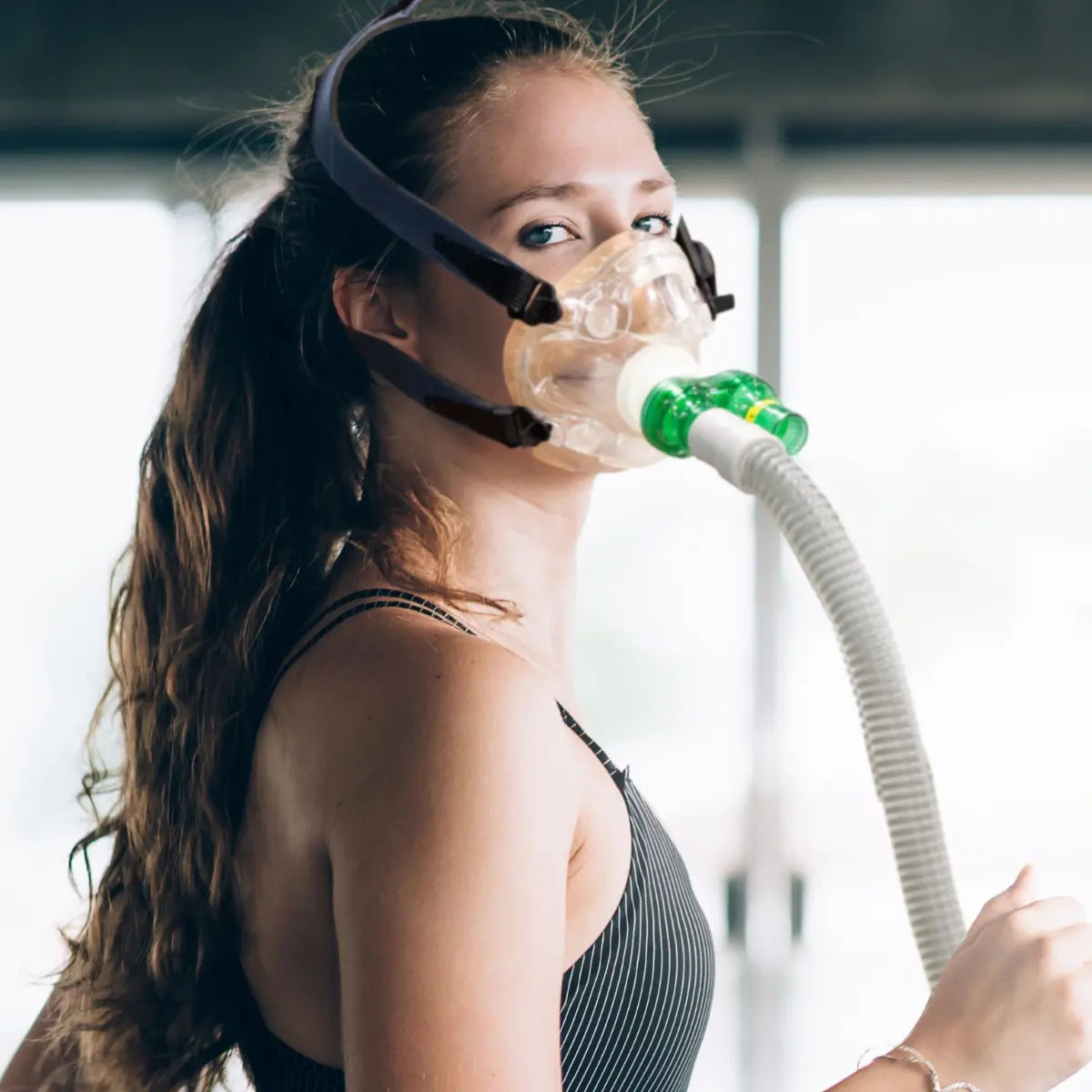

Athletes & Performance
Endurance support, faster recovery, improved VO2 max. Exercise with Oxygen Therapy is used by competitive athletes, CrossFit practitioners, and runners to remove oxygen as the performance limiter.


Longevity & Biohacking
Mitochondrial energy production, circulation support, and cellular resilience. EWOT fits into daily wellness routines alongside red light therapy, cold exposure, and other optimization tools.


Chronic Health Recovery
People navigating Lyme disease, long COVID, chronic fatigue, and inflammatory conditions use EWOT to support oxygen delivery and energy production as part of a broader recovery strategy.
How Exercise With Oxygen Therapy Works Day to Day
EWOT stands for Exercise With Oxygen Therapy — the practice of breathing 93% concentrated oxygen during cardiovascular exercise. But understanding what EWOT means isn't the same as understanding how EWOT training fits into real life.
A session takes 15 minutes. The EWOT equipment stays set up and ready to go — an oxygen concentrator, a 1,000-liter reservoir, a sealed mask, and whatever cardio machine you prefer. There is no appointment to book, no clinic to drive to, no prep time. You turn it on and move.
The people who see the strongest benefits of exercise with oxygen therapy are the ones who use it consistently — three to five sessions per week, at moderate effort, over months. But there can be benefits from doing just one session a week. A 15-minute session at steady effort done five days a week produces more meaningful adaptation than a longer session done once. Consistency is what drives the oxygen delivery improvements that make EWOT therapy effective. Intensity is secondary.
Exercise with oxygen therapy also works across a wide range of effort levels. Some users are competitive athletes doing EWOT training at 90% of their max heart rate. Others are recovering from chronic illness and starting with five minutes of gentle pedaling. The mechanism is the same: exercise increases circulation and oxygen demand, concentrated oxygen saturates blood plasma beyond what red blood cells alone can carry, and that oxygenated plasma reaches tissue that was previously under-supplied. That is how EWOT oxygen therapy works whether the goal is athletic performance, chronic health recovery, or longevity.
The goal is not necessarily to push harder. It is to show up consistently and let exercise with oxygen do the work it is designed to do.
Read the full EWOT protocol.
Watch: What Is EWOT and How Does Exercise With Oxygen Therapy Work?
Brad Pitzele explains how EWOT systems deliver concentrated oxygen during exercise and why timing matters more than concentration alone.


Why I Built One Thousand Roads
Read My Full Story
I didn't set out to start a wellness company. I was trying to recover my health. After being diagnosed with Lyme disease, cancer, and autoimmune conditions, I used EWOT as a core part of my recovery. What I learned was simple: when the body has the oxygen and energy it needs, it can repair, detoxify, and regenerate.
One Thousand Roads exists because I needed systems that actually worked — and I couldn't find them. Every system we sell is the same EWOT system I use myself.
"I built this company after using EWOT to recover from Lyme disease, cancer, and autoimmune illness. Its the same system I use myself."
What People Typically Notice
People often notice changes within the first few weeks of consistent exercise with oxygen therapy. The specific experience varies depending on starting health, fitness level, and session frequency — but certain patterns come up repeatedly across EWOT reviews and firsthand reports.
Exercise feels easier to sustain. Not dramatically at first, but noticeably. The same effort level that previously felt like a push starts to feel more manageable. Breathing during exertion feels less labored. Recovery between sessions shortens. Athletes doing EWOT training often report being able to sustain higher output for longer without the same fatigue accumulation.
Energy becomes more consistent throughout the day. Not the spike-and-crash pattern of stimulants — more like the background hum of a body that is actually getting the oxygen it needs. People describe it as feeling less depleted by mid-afternoon, or waking up without the heavy, sluggish start they had gotten used to. EWOT is one of the most powerful ways to boost energy naturally. This is one of the most commonly reported benefits of EWOT, and it tends to appear within the first two weeks of consistent use.
Clearer thinking comes up frequently. The brain is the most oxygen-dependent organ in the body. When oxygen delivery improves systemically, the brain tends to respond early and noticeably. People report improved focus, less mental fog, and faster recall — particularly people who had been dealing with brain fog as a symptom of chronic illness, Long COVID, or Lyme disease. For these individuals, EWOT therapy often becomes a central part of their recovery protocol.
Sleep quality often improves. Not everyone notices this immediately, but over the first month of consistent use, many people report falling asleep more easily and waking up feeling more rested.
Is exercise with oxygen therapy a scam? The experiences described above are consistent with what published EWOT research shows — that improved oxygen delivery during exercise produces measurable changes in plasma oxygenation, circulation, and cellular energy production. A double-blind study on healthy volunteers showed a 17% improvement in oxygenation state two weeks after completing two 15-minute sessions. The benefits of exercise with oxygen therapy are grounded in physiology, not marketing.
Read more EWOT research.
Experiences vary. Some people feel the difference after their first session. Others need a few weeks of consistent EWOT training before changes become obvious. The common thread is that consistency matters more than intensity — and the benefits tend to build on each other over time.
Read more about EWOT Benefits.
Read more about EWOT Safety.
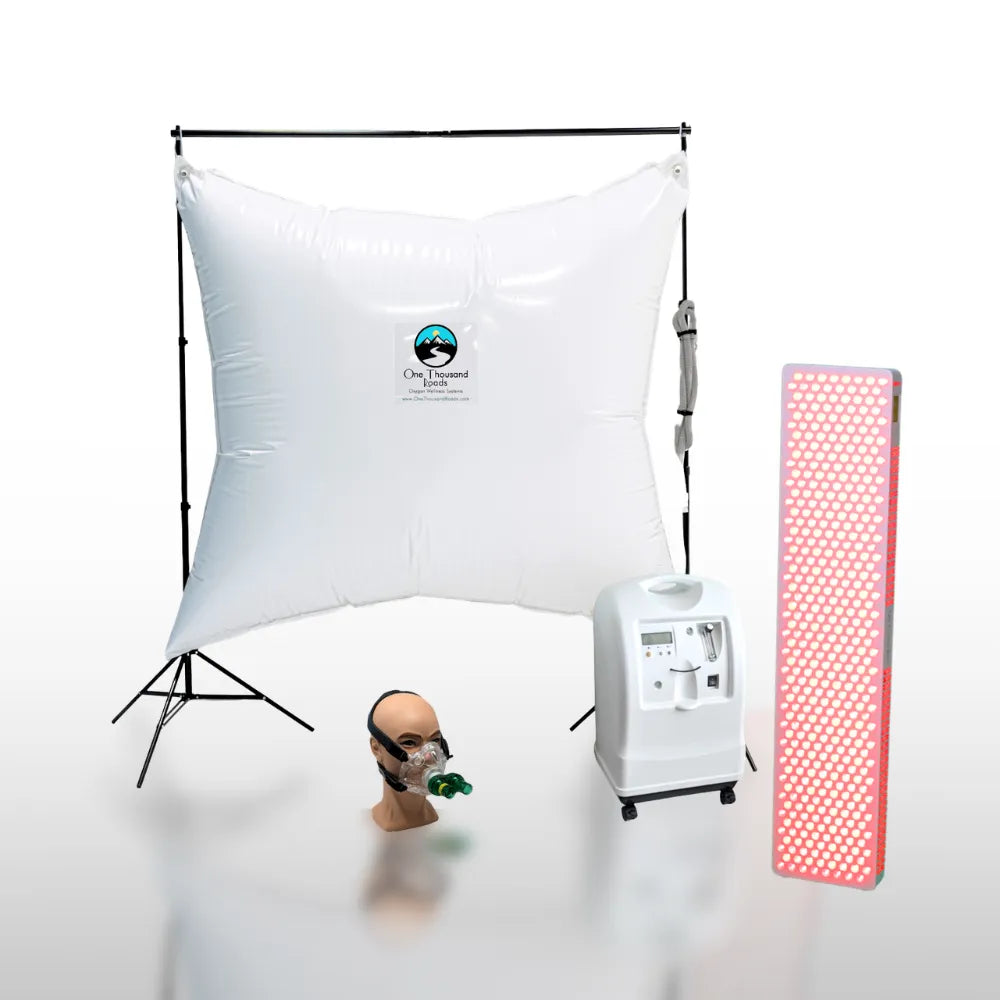

Accelerate Your Results with Red Light Therapy
Some people start with EWOT alone. Others combine it with red light therapy from the start —
using EWOT first to flood the body with oxygen, then using targeted red and near-infrared light to stimulate the mitochondria to utilize that excess oxygen. We call this the Oxygen Synergy System.
It is designed as a coordinated protocol, not separate purchases used independently.
Learn How EWOT + Red Light Work Together
Explore Oxygen Synergy SystemsEWOT Research & Education
We publish in-depth guides on EWOT benefits, safety, protocols, comparisons, and condition-specific applications. Our EWOT research page compiles primary-source citations and clinical study summaries supporting EWOT mechanisms — including a double-blind study showing a 17% improvement in oxygenation state after just two 15-minute sessions, and research demonstrating that 88% of patients with exercise-induced low blood oxygen improved with EWOT.
EWOT ResearchFrequently Asked Questions About EWOT
-
EWOT stands for Exercise With Oxygen Therapy. It refers to the practice of breathing concentrated oxygen — typically 93% from an oxygen concentrator and reservoir — during cardiovascular exercise. EWOT is sometimes also called oxygen-enhanced exercise or exercise with oxygen training. The concept originates from the research of Dr. Manfred von Ardenne, who studied how oxygen delivery during physical exertion could improve circulation and cellular energy production.
-
EWOT and HBOT both increase oxygen availability, but they work differently. HBOT uses a pressurized chamber to force oxygen into tissue while you sit or lie still. Sessions typically last 60–90 minutes, require a prescription, and often cost $100–$300 per session at a clinic. EWOT uses cardiovascular exercise to increase circulation and oxygen demand, then delivers 93% concentrated oxygen during that window of peak demand. Sessions take 15 minutes, can be done at home with your own system, and do not require a prescription. Many people explore both options — for a detailed breakdown, read our EWOT vs HBOT comparison guide.
-
Yes. Our EWOT systems are specifically designed for home use. Setup takes about 15 minutes — the system plugs into a standard wall outlet and requires no professional installation, no permanent modifications to your space, and no ongoing tank deliveries. The oxygen concentrator produces its own oxygen from room air. Most users complete their first session the same day their system arrives. Read the EWOT at Home Guide
-
EWOT delivers 93% oxygen — the same concentration used in standard home oxygen concentrators — during controlled 15-minute exercise sessions. It does not involve pressurized environments, medical-grade equipment, or oxygen tanks. The primary consideration is exercise intensity: we recommend starting at a comfortable pace and gradually increasing over time, especially if you are recovering from a chronic condition. Over 90% of users experience no adverse effects. For a detailed review of safety considerations, potential side effects, and who should consult a doctor before starting, read our EWOT Safety Guide
-
Yes. Exercise with oxygen therapy is grounded in well-documented physiology — exercise increases circulation and oxygen demand, and breathing concentrated oxygen during that window saturates blood plasma beyond what normal air provides. A double-blind study on healthy volunteers showed a 17% improvement in oxygenation state two weeks after completing EWOT sessions. Clinical research on patients with exercise-induced low oxygen levels showed 88% improved their endurance, oxygen saturation, and symptom burden. These and other studies are documented on our EWOT Research page. EWOT is not a medical treatment or a cure for any condition — it is a structured wellness practice with a growing body of supporting research.
-
A standard EWOT session is 15 minutes of cardiovascular exercise — cycling, walking on a treadmill, or using an elliptical — while breathing 93% concentrated oxygen through a sealed mask connected to a reservoir. Most people start at a comfortable intensity and gradually work up to 70–80% of their theoretical max heart rate over time. Sessions are typically done 3 to 5 times per week. The protocol can be adjusted for different fitness levels and health situations. For the full breakdown including ramp-up guidance for sensitive users, read our EWOT Protocol Guide
-
Complete EWOT systems from One Thousand Roads start at $1,899.99 for a 5 LPM system and $2,499.99 for a 10 LPM system. Both include the oxygen concentrator, 1,000-liter reservoir, sealed NextGen exercise mask, tubing, and all connection hardware. Free shipping is included on all US orders. The difference between systems is refill speed and intended usage volume — not the therapy itself. Both deliver the same 93% oxygen for the same 15-minute sessions. Most customers choose the 10 LPM for its faster refill, greater scheduling flexibility, and longer concentrator lifespan. The 5 LPM is available for single users on a tighter budget with a fixed daily routine.
Ready to Start?
If you have questions about which system is right for you, or whether EWOT fits your situation, we're here to help.
Explore EWOT SystemsLearn More About Exercise With Oxygen Therapy
EWOT benefits — energy, circulation, recovery, reduced inflammation, and performance explained.
EWOT protocol — how to do exercise with oxygen therapy correctly, including intensity, duration, and frequency.
EWOT at home — what a home EWOT setup looks like and how to get started with exercise with oxygen therapy at home.
EWOT vs. hyperbaric oxygen therapy — how EWOT compares to HBOT on cost, accessibility, time, and outcomes.
EWOT research — clinical studies and primary sources on exercise with oxygen therapy.
EWOT safety and side effects — what to expect, EWOT dangers to be aware of, and when to use caution.